

We all know what happened to Medusa. I was expecting a depressing story, or at best—a beautifully tragic one. But instead, I found an empowering story of self-discovery.
Medusa has been living with her sisters on a small rocky island for four years, when a boy arrives on a boat. Medusa is starved for company and conversation and cannot resist speaking to him—although she does keep herself hidden. Perseus is lost and equally lonely and they find themselves confiding in each other and even falling in love—until the truth of Perseus’s quest is revealed.
Medusa’s relationship with her head of snakes is wonderfully evoked. Each individual strand-snake is named and described. Her snakes react to her moods, though she doesn’t feel like she fully controls them and there is an element of fear—Athena has warned her, but she doesn’t truly know what they have the power to do.
Without giving the ending away, this is not the traditional tale, this is a reclaiming of Medusa’s power—not just her magical snake hair but also her name and her story. The prose is a little flowery and poetic, but this also adds to the mythic tone, and the last few paragraphs of the book are truly transcendent.
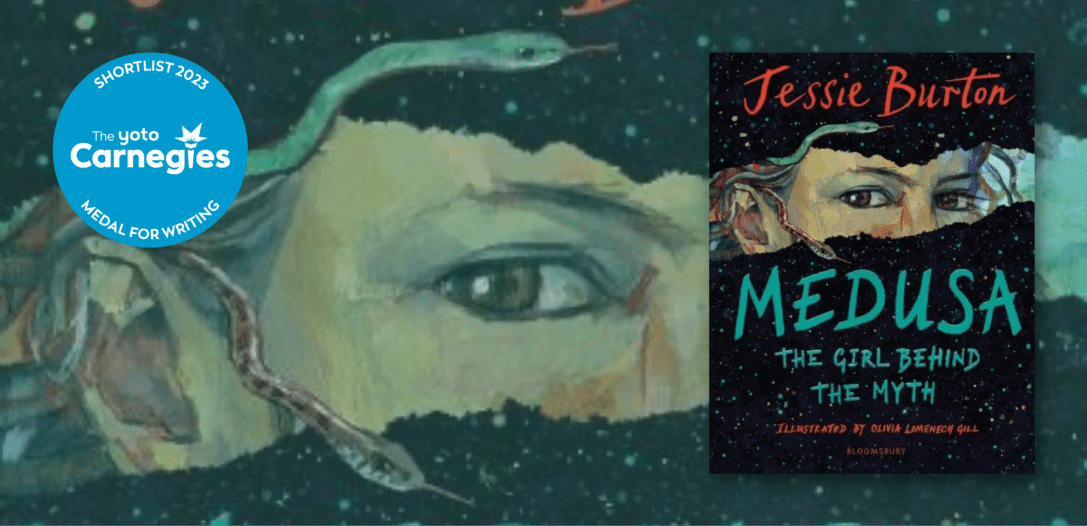
The gorgeous illustrations also reflect the feminist reframing: Medusa is vivid, bold and dynamic, while Perseus is a handsome statue and Poseidon is a looming, faceless monolith.
I thoroughly enjoyed this lyrical and powerful retelling of Medusa’s story.
 Swimming in Books