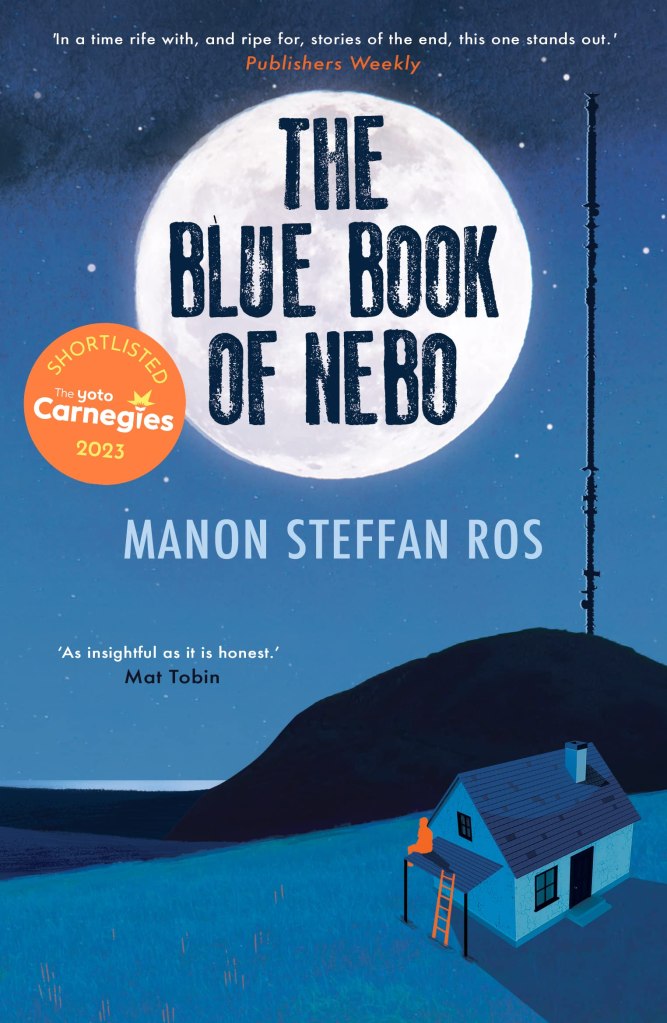
‘The Blue Book of Nebo’ by Manon Steffan Ros

Dylan’s ‘Blue Book of Nebo’ is a record of the events that follow ‘The End’. 14-year-old Dylan writes about what his world is like now, 8 years later, and his mum writes about the things Dylan doesn’t remember – what happened when the bombs started falling, the electricity went off and everyone else disappeared from their tiny Welsh town of Nebo, near the island of Anglesey. 

Though their life before was busy and safe, Dylan was anxious and insecure and Rowenna was lonely and unfulfilled. Though their life now is so much more insecure, Dylan is confident and proud of his ability to provide food and shelter for his family. Rowenna loves the peace and simplicity of their new life.

‘The Blue Book of Nebo’ is a brief but achingly beautiful novel about finding out what is important when everything else has been stripped away–a simultaneously devastating and hopeful read.

‘Needle’ by Patrice Lawrence

Fifteen-year-old Charlene loves to knit, she finds it calming, and she’s particularly enjoying making a special dinosaur blanket for her little sister, Kandi. The only problem is that she hasn’t seen Kandi for two years since; their mum died, Kandi went to live with her dad, and Charlene went into foster care.

Charlene gets on well with her foster carer, Annie, but not with Annie’s son Blake who resents Charlene for taking his bedroom when he went away to university. When Blake destroys Kandi’s blanket, Charlene loses her temper, stabs him in the hand with her knitting needle, and starts a downward spiral that takes her further and further away from the possibility of seeing her sister again. If Charlene could just say sorry, that would help, but Charlene never says sorry.

The cover shows the knitting needles as a symbol of resistance and the phrase ‘sorry not sorry’, is a subversive call to rebellion. There are definitely things that Charlene needs to apologise for, but there are many more injustices that have been perpetrated against her. It is a tragedy that Charlene has lost her mother and been separated from her sister, but at the same time Kandi’s dad has to protect his daughter from the fallout of Charlene’s anger. ‘Needle’ is an exceptionally nuanced and textured story, considering that it is so brief, and it would generate a lot of interesting discussion. 

‘Needle’ is an excellent addition to Barrington Stoke’s dyslexia-friendly collection, but it would be an engaging, page-turning and empathy-inducing read for any teenager. Highly recommended.

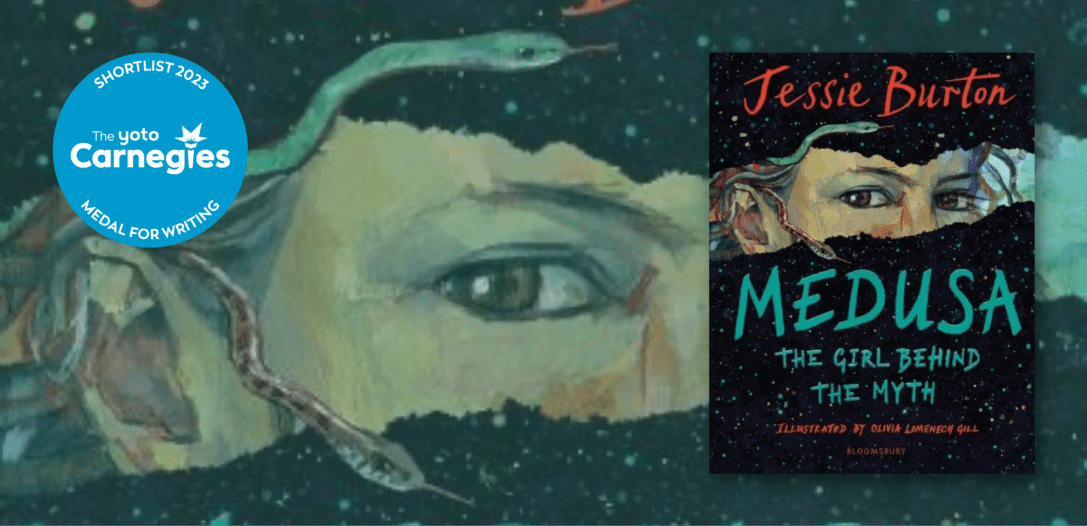
‘Medusa’ by Jessie Burton, illustrated by Olivia Lomenech Gill

We all know what happened to Medusa. I was expecting a depressing story, or at best—a beautifully tragic one. But instead, I found an empowering story of self-discovery. 

Medusa has been living with her sisters on a small rocky island for four years, when a boy arrives on a boat. Medusa is starved for company and conversation and cannot resist speaking to him—although she does keep herself hidden. Perseus is lost and equally lonely and they find themselves confiding in each other and even falling in love—until the truth of Perseus’s quest is revealed. 

Medusa’s relationship with her head of snakes is wonderfully evoked. Each individual strand-snake is named and described. Her snakes react to her moods, though she doesn’t feel like she fully controls them and there is an element of fear—Athena has warned her, but she doesn’t truly know what they have the power to do. 

Without giving the ending away, this is not the traditional tale, this is a reclaiming of Medusa’s power—not just her magical snake hair but also her name and her story. The prose is a little flowery and poetic, but this also adds to the mythic tone, and the last few paragraphs of the book are truly transcendent. 

The gorgeous illustrations also reflect the feminist reframing: Medusa is vivid, bold and dynamic, while Perseus is a handsome statue and Poseidon is a looming, faceless monolith. 

I thoroughly enjoyed this lyrical and powerful retelling of Medusa’s story.

‘The Eternal Return of Clara Hart’ by Louise Finch

Spence is already having a bad day when Clara Hart crashes into his car in the school parking lot – it’s the one-year anniversary of his mother’s death and he has slept in his car to avoid the inevitable sad and awkward conversations with his dad. His best friend Anthony is apparently too busy rating the girls to remember what day it is and has planned a party that night. Since it’s better than being at home with his Dad, Spence goes to the party but watches Clara get drunk, then go upstairs with Anthony. Then Clara dies.

But this is just the beginning. When Spence wakes up he’s back in his car in the school parking lot, Clara crashes into him and the day begins all over again. And then again, and again. Spence must work out what he’s got to do to save Clara and break the cycle. 

It’s a great concept and the story had me hooked from the first page. It did sound a little similar to ‘Before I Fall’ but in this case the protagonist has to watch someone else die over and over again, and it’s a more sophisticated story. 

Spence’s first scene with his friend Anthony sets the tone of the book, when Anthony cat-calls a girl in their year and then rates her to his friends. It’s a jarring, uncomfortable moment as Spence goes along with Anthony’s ‘banter’ and doesn’t call him out. But this perspective is what makes this book so brilliant and Spence’s voice is particularly authentic and compelling. Not only does he have to stand up to his friends, but he also needs to evaluate his own behaviour in the process. Fortunately it’s not a preachy book and the twists and turns of the plot keep up the pace.

‘The Eternal Return of Clara Hart’ is a thought-provoking and page-turning read about friendship and toxic masculinity and should be required reading for teenagers, particularly in light of the rape culture exposed in the ‘Everyone’s Invited’ campaign. Highly recommended. 

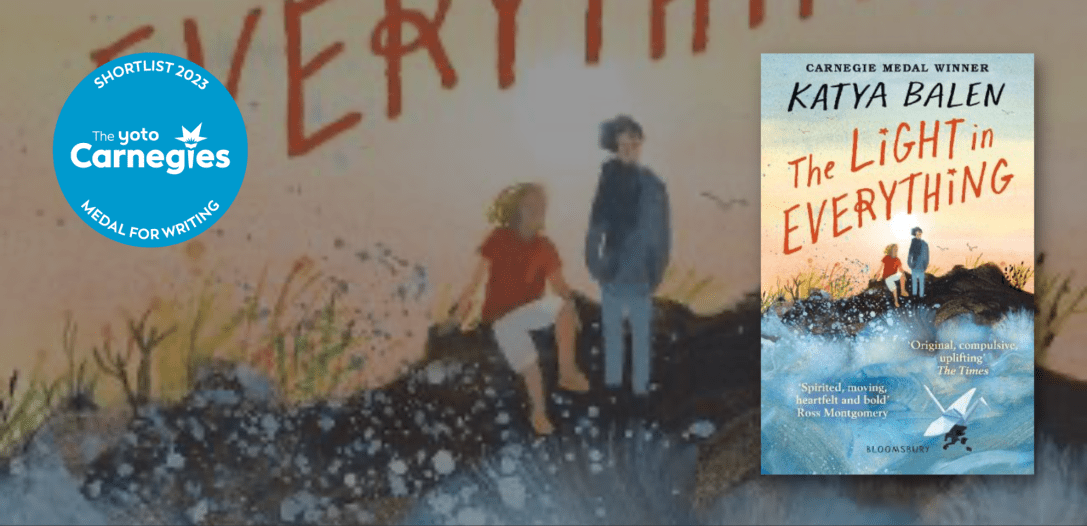
‘The Light in Everything’ by Katya Balen

Zofia and Tom are opposites: Zofia is bold, brave and loud while Tom is quiet and fearful. Zofia is training herself to withstand the cold seawater and swim to a rocky outcrop the locals call ‘Fiji’ while Tom makes paper cranes and sleeps with the lights on to drive out the dark. But when Zofia’s dad and Tom’s mum move in together, they must learn to get along, especially because their parents are also expecting a baby together.

Zofia is furiously angry that Tom and his mum have pushed their way into her life, she can’t understand why Tom is so timid and afraid, and she’s worried that her anger will drive her dad away and she will be left out of his cosy new family. Tom just wants his mum to be happy, after the difficult times that they’ve had, but he can’t quite trust that the new man in her life won’t be aggressive and violent like his dad. But as Zofia and Tom begin to understand one another they realise that perhaps they have more in common than they know, and perhaps they can find a way to be a family.

The story is told from both Tom and Zofia’s perspectives in alternating mini-chapters that make it impossible to put the book down and I finished it within an afternoon. Like ‘October, October’, the book cover is a stunning work of art in its own right—created by illustrator, Sydney Smith. (I have the cover art of ‘October, October’ on a tote bag—perhaps I’ll have to expand my collection.)

‘The Light in Everything’ is a quiet story, but it is exquisitely written, full of big emotions, vivid descriptions and authentic, heartrending moments. The protagonists are only 11, but I would highly recommend this book for KS3 as well as KS2 readers.