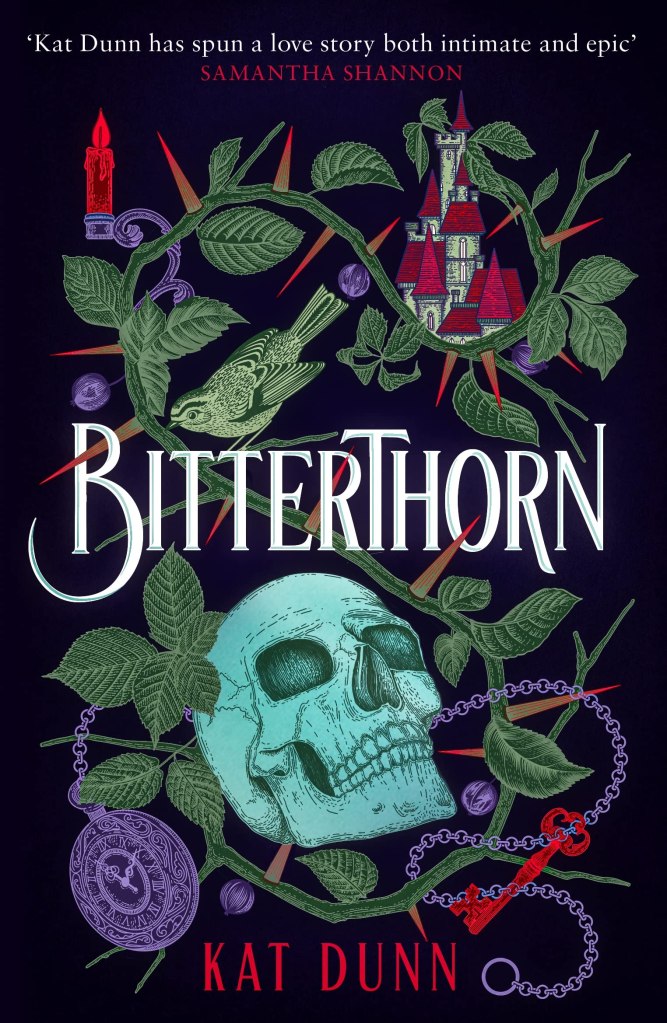
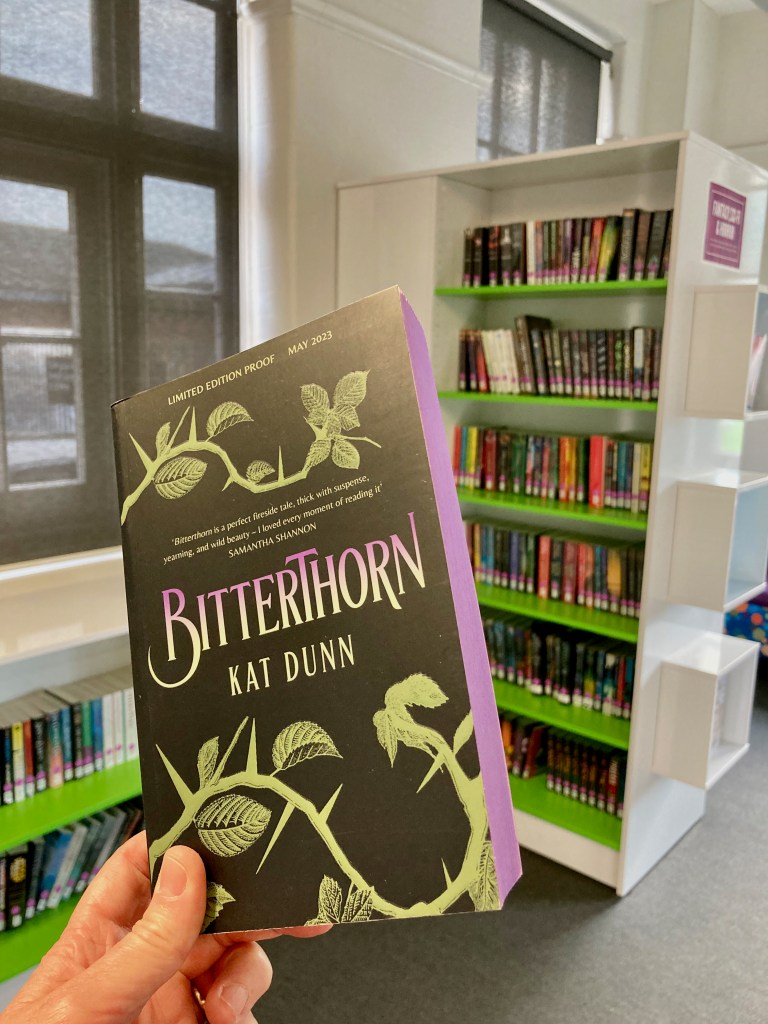
‘Bitterthorn’ by Kat Dunn

There is a curse that hangs over the town of Blumwald. Every fifty years, the Witch comes down from her castle in the forest and takes a young man as her companion, never to return. No one knows why or for what purpose the young men are taken, but it has been fifty years since the Witch’s last visit…

Mina’s mother died when she was twelve, her father quickly remarried and she’s been lonely since then. As her father prepares for an important visitor, Mina finds herself overlooked and unwanted once again. In desperation she offers herself to the Witch and is accepted as her new companion. Mina’s new life, however, is just as lonely and frustrating as her old life so she sets out to befriend the Witch and unravel the mystery of the Witch’s curse.

‘Bitterthorn’ is an intoxicating blend of historical fiction, queer gothic romance and fairytale. The backdrop of Chancellor Bismarck’s visit and the Unification of Germany places the story in a very specific historical moment in the late 1860s and yet it incorporates plenty of Grimm’s fairy tale elements including witches, wicked stepmothers, hedges of thorns, spindles and curses. 

It is also an exquisitely written book, replete with lush botanical imagery and steeped in atmosphere. A thoroughly beguiling read, perfect for fans of Adalyn Grace and Holly Black.

Many thanks to Andersen for this gorgeous limited edition proof.
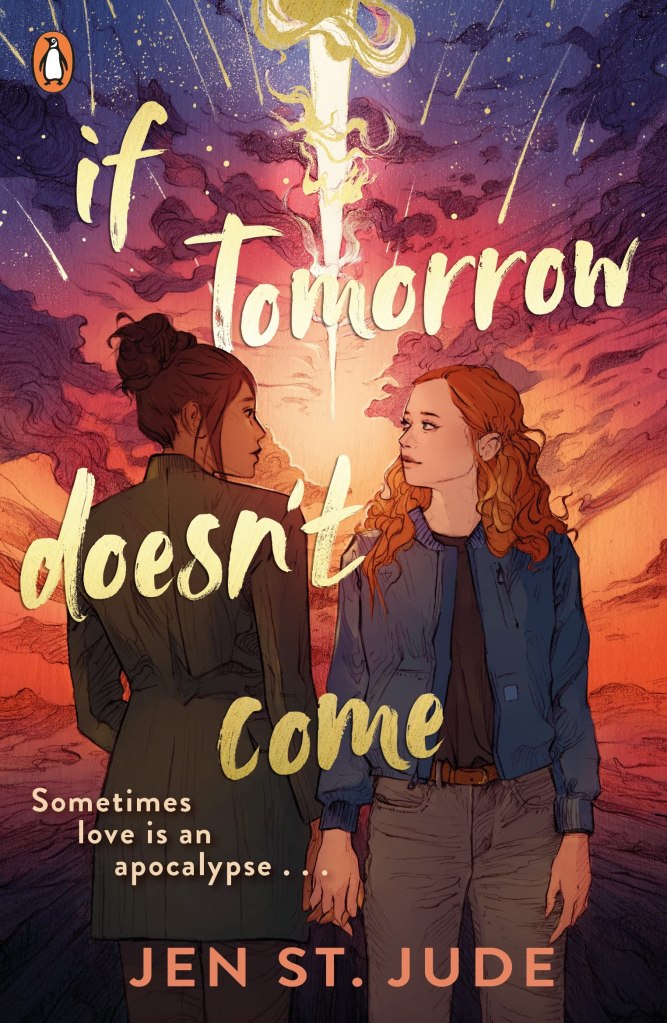
‘If Tomorrow Doesn’t Come’ by Jen St Jude

Avery Byrne is about to take her own life when she receives the news that a huge asteroid is headed for the earth and everyone has just nine days left to live. This spurs her to reconnect with her family and her best friend, Cass, who she has been secretly in love with for years.

It’s an incredibly arresting opening – you know that the book is not going to end well, but you’re still thoroughly invested in Avery sorting out her relationships in the time she has left.

In between her family’s attempts to stockpile food and prepare a basement bunker in the hope of surviving the fallout, we see through flashbacks how Avery’s friendship with Cass unfolded over the years, as well as Avery’s struggles with her mental health. 

Avery is someone who has always succeeded at anything she has tried, but her success is a brittle veneer over the depression that has haunted her for her whole life. When she goes away to college and struggles to keep up with the work, she fears that she has the same deep sadness inside herself as her aunt who walked into the sea to her death, on the day Avery was born. 

I have some pupils who are big fans of ‘All That’s Left in the World’ so I’ll definitely be recommending this to them. It also reminded me of ‘The Forevers’ by Chris Whitaker.

This book is definitely about emotional resolution more than death-by-asteroid resolution, so if you’re expecting a high-stakes dystopian thriller, this is not that book. It is, however, a beautifully rendered picture of a friendship developing into a romantic relationship as well as a sensitive and nuanced exploration of depression. I thoroughly enjoyed this – a heartbreaking and yet surprisingly hopeful read.

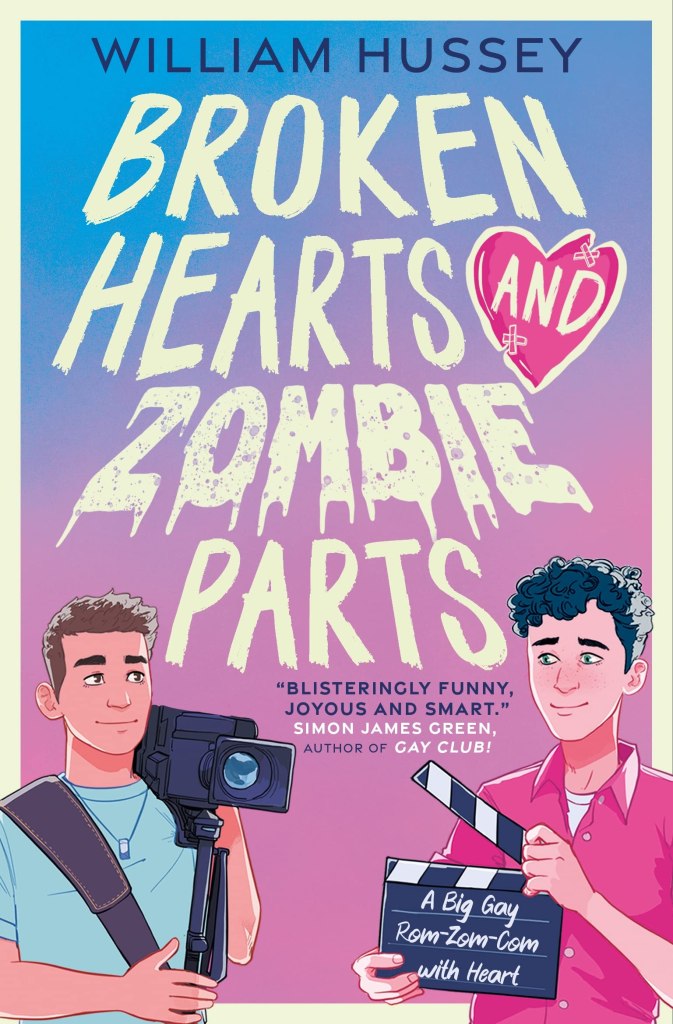
‘Broken Hearts and Zombie Parts’ by William Hussey

After Jesse Spark dramatically collapses at prom, the doctors discover that he has a life-threatening condition that requires open-heart surgery. Jesse decides there are two things he wants to do before his surgery at the end of the summer. He wants to finish shooting the zombie film he has written with his friends. And he wants to fall in love before his body is disfigured by a horrific scar down the centre of his chest – because who will want him after that? 

There are some obstacles to Jesse’s plan. His best friends, Caspar and Morgan, are being weird with each other, but they won’t tell him what’s going on, he has no budget for his film, and where is he going to find a boyfriend within the next month? Fortunately, Jesse’s friends rally together and ‘Zombie Honeymoon’ starts filming. And even better, Casper’s attractive, gay cousin arrives for the summer, keen to be involved in the film. 

Jesse himself is a charmingly verbose and dynamic character, although he is painfully insecure and terrified that no one will ever love him after his surgery. The negative body image theme comes through strongly throughout the book. Jesse’s friend Morgan is a brilliant actor, but her confidence is destroyed when she is shot down by a casting agent for not being thin or stereotypically attractive enough. And of course, Jesse does find a boyfriend, but more importantly, he learns to accept and love himself. 

The film-centred plot reminded me a little of ‘Me, Earl and the Dying Girl’ but Jesse is a much more endearing character. I particularly enjoyed the song titles – a lovely tribute to UK MG & YA LGBTQ+ books and authors. The medical aspects of the story feel particularly authentic, as the author was writing from his own experience. 

‘Broken Hearts and Zombie Parts’ is a hilarious and heart-healing story about friendship, love, body positivity and zombies. I adored every second of this cosy warm hug of a book. Highly recommended!

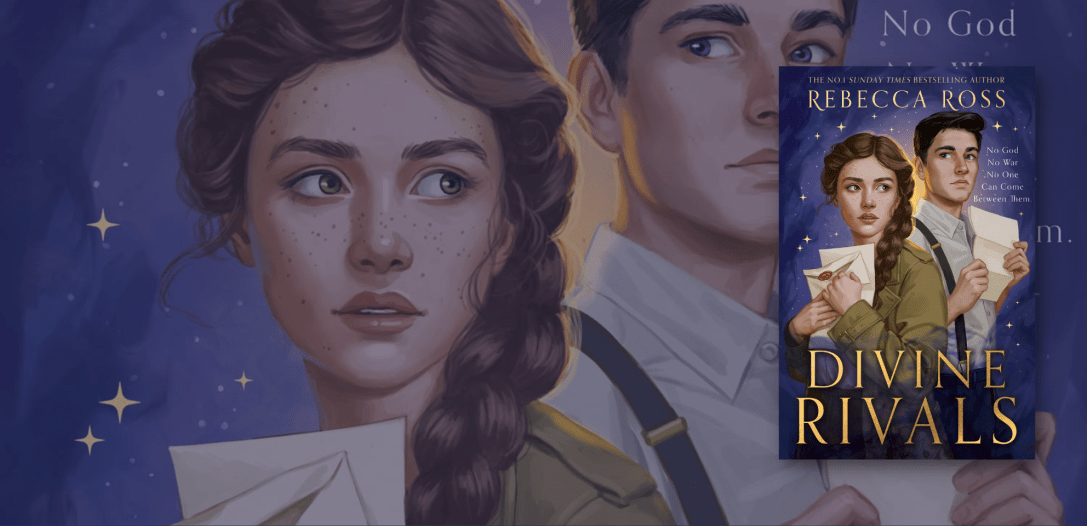
‘Divine Rivals’ by Rebecca Ross

‘Divine Rivals’ is a fascinating mash-up of mythology, historical fiction and romance. The story feels like it is set in the mid-twentieth century, with trench warfare and war correspondents typing up their dispatches on typewriters, and yet it is a more egalitarian world where both men and women fight in the army and same-sex marriage is legal. And in this world the war they are reporting on is due to the rivalry of two ancient gods: Dacre and Enva.

When her brother goes off to fight in the war, Iris types letters to him that mysteriously disappear when she puts them in her wardrobe. She is convinced that she is communicating with him through some magic means until someone writes back and it is not her brother. As Iris exchanges letters with the mysterious ‘Carver’ she begins to open up to him and realises that she is falling in love with someone she has never met. 

But, in parallel to the clash between Dacre and Enva, Iris has a nemesis of her own. Roman Kitt was her fiercest competition for the coveted columnist job at the Oath Gazette, and now he has followed her to the front lines – to show her up again as a war correspondent, Iris is convinced. But if she hates him so much, why can’t Iris stop thinking about him? And why do they keep saving each other’s lives?

I couldn’t put this book down, between the chemistry sparking between Iris and Roman, the immersive setting, and Iris herself – a wonderfully brave, resilient and compassionate character. A thrilling and intriguing new fantasy world – I can’t wait for the next book in the series.

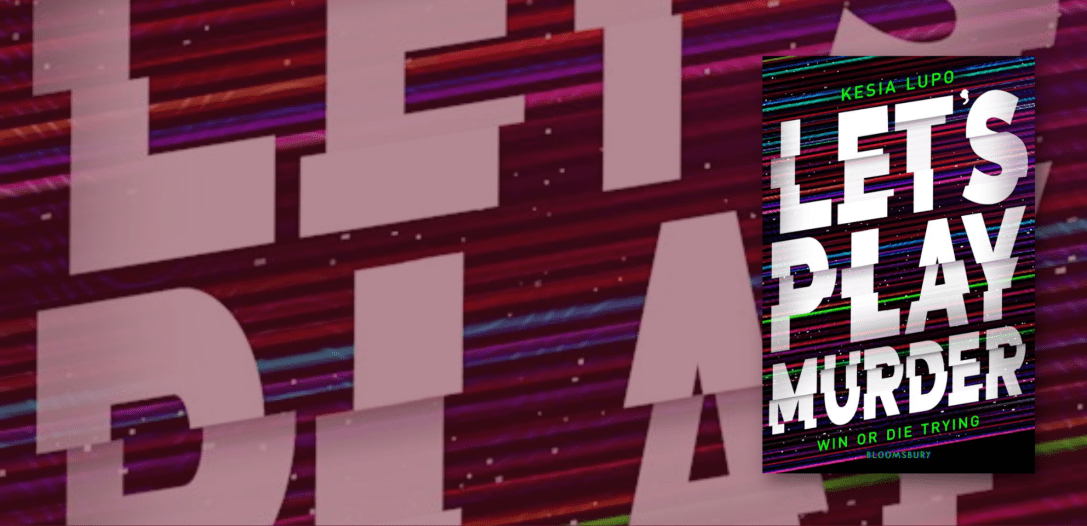
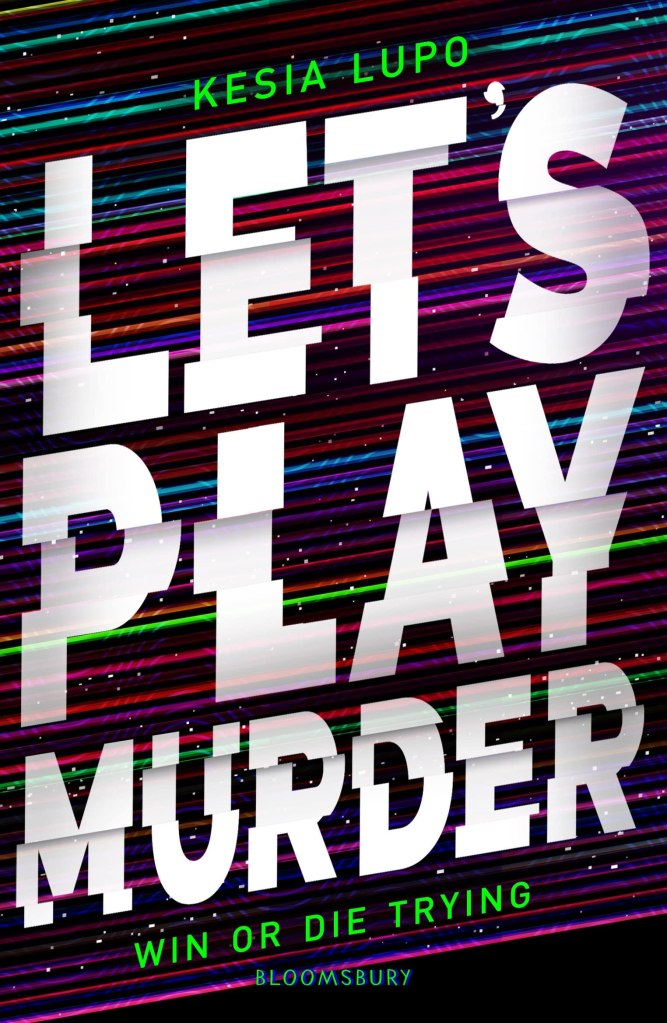
‘Let’s Play Murder’ by Kesia Lupo

Veronica picks up an ancient VR headset to please her little brother who is critically ill in hospital, but as soon as they start playing she finds herself inside a different world. It is ‘The Game’ – an urban legend in VR gaming circles that turns out to be true. The Game is an incredibly realistic and immersive murder mystery. None of the players can leave until they’ve solved the case and the winner will receive a huge cash prize. 

But soon after they start to play, the game takes a deadly turn. All of the players are concealing something from their real lives and all of them have a motive for murder. And the game itself is also out to get them – will any of them make it out alive? 

VR is a tricky proposition to write (I know, I’ve tried!) because it’s difficult to raise the stakes in an environment that is all in your head – the contemporary version of it was all a dream. Except in this case it isn’t, and the virtual world starts to bleed into the real world. 

‘Let’s Play Murder’ is a mash-up of locked-room murder mystery, horror, ghost story and thriller, and the whiplashing twists and turns of the plot kept me guessing. A fast-paced, gripping and terrifying read. 

‘Needle’ by Patrice Lawrence

Fifteen-year-old Charlene loves to knit, she finds it calming, and she’s particularly enjoying making a special dinosaur blanket for her little sister, Kandi. The only problem is that she hasn’t seen Kandi for two years since; their mum died, Kandi went to live with her dad, and Charlene went into foster care.

Charlene gets on well with her foster carer, Annie, but not with Annie’s son Blake who resents Charlene for taking his bedroom when he went away to university. When Blake destroys Kandi’s blanket, Charlene loses her temper, stabs him in the hand with her knitting needle, and starts a downward spiral that takes her further and further away from the possibility of seeing her sister again. If Charlene could just say sorry, that would help, but Charlene never says sorry.

The cover shows the knitting needles as a symbol of resistance and the phrase ‘sorry not sorry’, is a subversive call to rebellion. There are definitely things that Charlene needs to apologise for, but there are many more injustices that have been perpetrated against her. It is a tragedy that Charlene has lost her mother and been separated from her sister, but at the same time Kandi’s dad has to protect his daughter from the fallout of Charlene’s anger. ‘Needle’ is an exceptionally nuanced and textured story, considering that it is so brief, and it would generate a lot of interesting discussion. 

‘Needle’ is an excellent addition to Barrington Stoke’s dyslexia-friendly collection, but it would be an engaging, page-turning and empathy-inducing read for any teenager. Highly recommended.

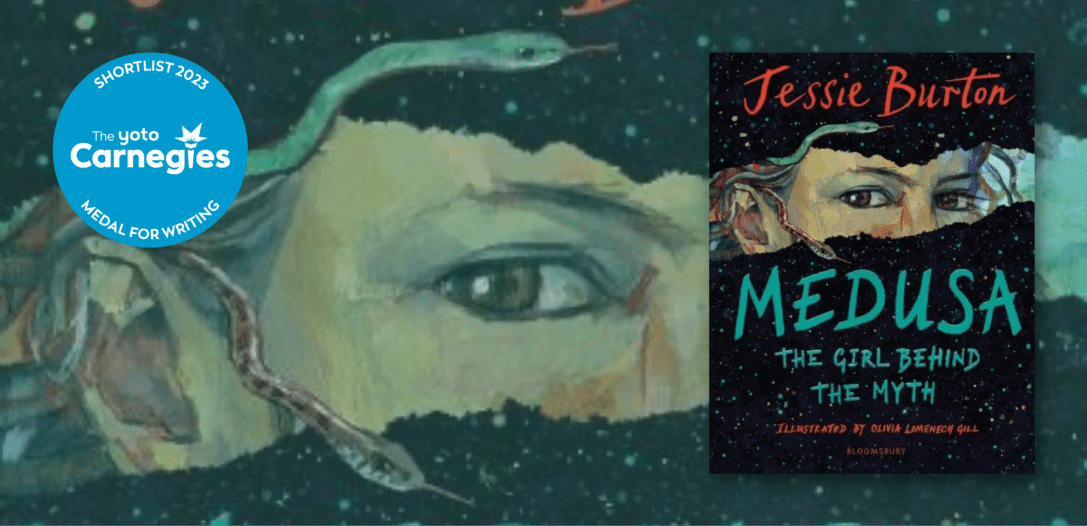
‘Medusa’ by Jessie Burton, illustrated by Olivia Lomenech Gill

We all know what happened to Medusa. I was expecting a depressing story, or at best—a beautifully tragic one. But instead, I found an empowering story of self-discovery. 

Medusa has been living with her sisters on a small rocky island for four years, when a boy arrives on a boat. Medusa is starved for company and conversation and cannot resist speaking to him—although she does keep herself hidden. Perseus is lost and equally lonely and they find themselves confiding in each other and even falling in love—until the truth of Perseus’s quest is revealed. 

Medusa’s relationship with her head of snakes is wonderfully evoked. Each individual strand-snake is named and described. Her snakes react to her moods, though she doesn’t feel like she fully controls them and there is an element of fear—Athena has warned her, but she doesn’t truly know what they have the power to do. 

Without giving the ending away, this is not the traditional tale, this is a reclaiming of Medusa’s power—not just her magical snake hair but also her name and her story. The prose is a little flowery and poetic, but this also adds to the mythic tone, and the last few paragraphs of the book are truly transcendent. 

The gorgeous illustrations also reflect the feminist reframing: Medusa is vivid, bold and dynamic, while Perseus is a handsome statue and Poseidon is a looming, faceless monolith. 

I thoroughly enjoyed this lyrical and powerful retelling of Medusa’s story.

‘The Eternal Return of Clara Hart’ by Louise Finch

Spence is already having a bad day when Clara Hart crashes into his car in the school parking lot – it’s the one-year anniversary of his mother’s death and he has slept in his car to avoid the inevitable sad and awkward conversations with his dad. His best friend Anthony is apparently too busy rating the girls to remember what day it is and has planned a party that night. Since it’s better than being at home with his Dad, Spence goes to the party but watches Clara get drunk, then go upstairs with Anthony. Then Clara dies.

But this is just the beginning. When Spence wakes up he’s back in his car in the school parking lot, Clara crashes into him and the day begins all over again. And then again, and again. Spence must work out what he’s got to do to save Clara and break the cycle. 

It’s a great concept and the story had me hooked from the first page. It did sound a little similar to ‘Before I Fall’ but in this case the protagonist has to watch someone else die over and over again, and it’s a more sophisticated story. 

Spence’s first scene with his friend Anthony sets the tone of the book, when Anthony cat-calls a girl in their year and then rates her to his friends. It’s a jarring, uncomfortable moment as Spence goes along with Anthony’s ‘banter’ and doesn’t call him out. But this perspective is what makes this book so brilliant and Spence’s voice is particularly authentic and compelling. Not only does he have to stand up to his friends, but he also needs to evaluate his own behaviour in the process. Fortunately it’s not a preachy book and the twists and turns of the plot keep up the pace.

‘The Eternal Return of Clara Hart’ is a thought-provoking and page-turning read about friendship and toxic masculinity and should be required reading for teenagers, particularly in light of the rape culture exposed in the ‘Everyone’s Invited’ campaign. Highly recommended. 

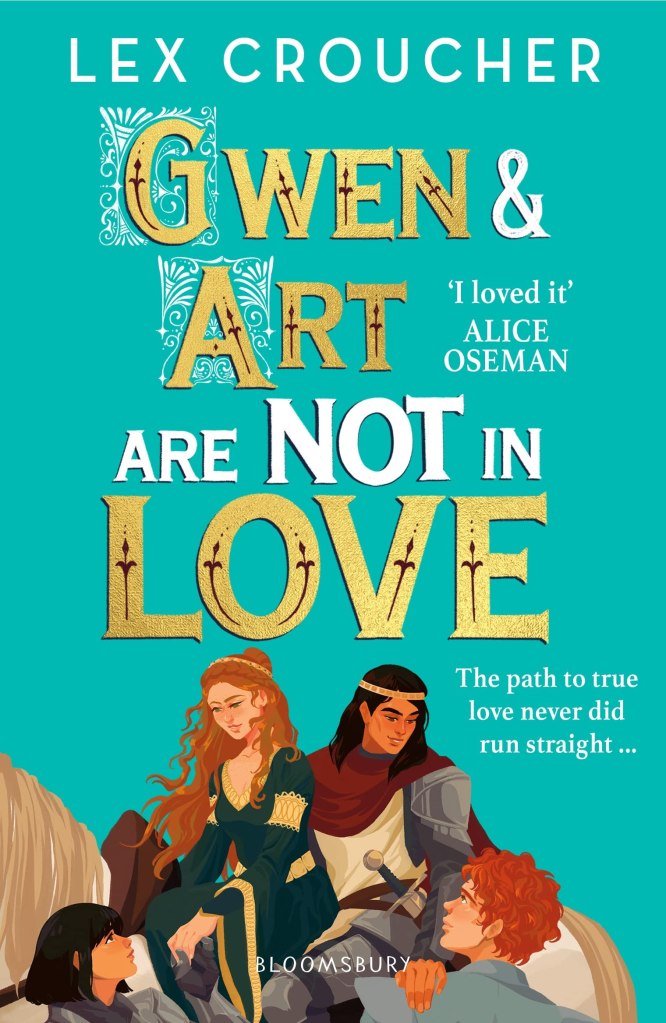
‘Gwen & Art Are Not in Love’ by Lex Croucher

Gwen and Art have been betrothed to be married since they were children and they have hated each other just as long. This mismatched couple is not the original Guinevere and Arthur, but Princess Gwendolyn and Arthur Delacey, son of Lord Delacey, some generations later, but still living in a Camelot-centred kingdom. But now, at a time of upheaval, their parents decide it might be time for them to bury their resentment and get married, for the sake of political stability. 

There are other obstacles to their union though, apart from their mutual loathing: Gwen is besotted with Lady Bridget Leclair – the first, and only female knight in Camelot, although she can’t imagine any circumstances under which she’d ever be able to confess her crush. Arthur will kiss any stableboy who smiles at him, but since returning to Camelot he can’t stop thinking about one person in particular. But when Gwen and Art discover each other’s secret, they must strike a pact to get their parents off their backs and perhaps save Camelot as well in the process. 

I really enjoyed ‘Reputation’, but I think this book is even better – a delightful cosy fantasy full of found family, queer romance and swashbuckling. It is also very funny, full of snarky dialogue and slapstick situations, but the characters are thoroughly warm and engaging – an absolute joy to read. 

‘Gwen & Art are Not in Love’ is particularly perfect for those who loved the BBC series, ‘Merlin’, and mourned the happy ending that Merthur were denied.

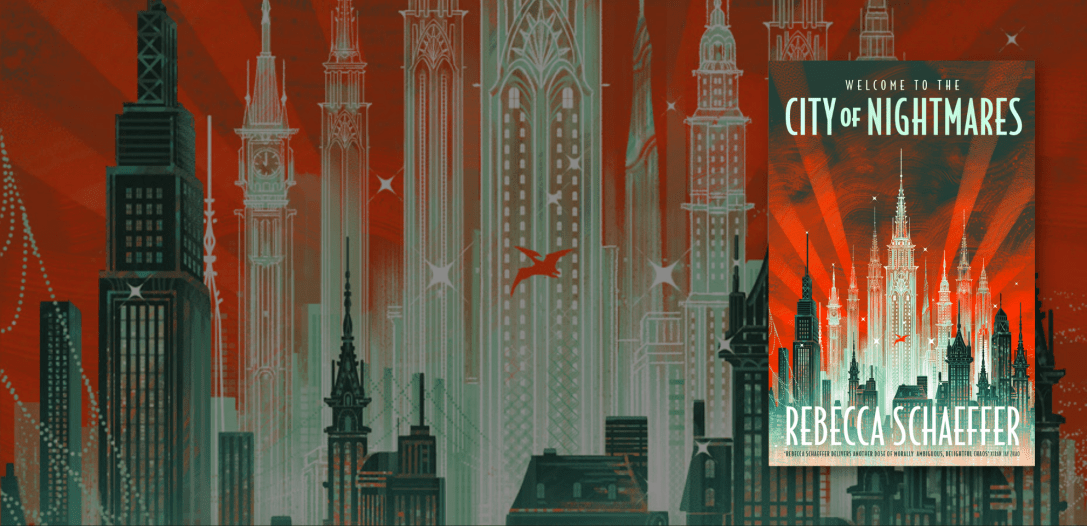
‘City of Nightmares’ by Rebecca Schaeffer

Nineteen-year-old Ness lives in a dark Gotham City-style world, ruled by gangs and corrupt politicians, but even worse, everyone is at risk of irreversibly transforming into their worst nightmare and Ness has never recovered from the trauma of her beloved sister changing into a giant spider and going on a murderous rampage. Now alone in the world, Ness has survived by making a home amongst the ‘Friends of the Restful Soul’ which is possibly a cult but also provides counselling and support for those traumatised by Nightmares. But the Friends are becoming tired of Ness’s fearful responses to Nightmares and her general lack of usefulness after years of trauma therapy, and she suspects she might soon be evicted from her safe haven. She grasps at a courier job as an opportunity to redeem herself but it unexpectedly thrusts her into danger and a vast conspiracy that undermines everything she thought she knew. However, she also finds an unlikely ally…

I wasn’t sure what to expect with this one but I was thoroughly beguiled – the world that Rebecca Shaeffer has created is equally thrilling and terrifying. I love the fact that Ness is irredeemably cowardly for most of the book but her slowly kindling courage is revealed as she begins to trust and open up to Cy. I also loved her relationship with her friend Priya and the narrative device of having to face your worst fears for fear of turning into them. A witty, fast-paced and engaging read – I can’t wait for the next instalment.